


Summer 1959. You’re attending Gypsy: a musical fable, based on the memoirs of famed burlesque performer Gypsy Rose Lee. But the show’s driving force is her determined and domineering mother, Rose Havoc, played by Ethel Merman. After one of the most thrilling overtures you’ve ever heard, the curtain rises on a group of adorable kids auditioning for a vaudeville act. Merman barges into the scene, shouting “Sing out, Louise!” as she walks down the aisle carrying a dog. Her daughters—the cloying Baby June and her meek older sister, Louise—are among those auditioning, and Rose will not let anything or anyone curtail their rise to stardom. She finds a patient partner, Herbie, who tries to bring some stability as Rose builds a traveling act for June (who Rose insists is a child even as she enters early adulthood) and some dancing “newsboys” (one of whom is the timid Louise). When June and the newsboys bail on the act, Rose pivots her attention to Louise without much success. When they hit rock bottom (a burlesque house in Wichita), Louise does a strip as a last minute replacement, beginning her transformation into “Gypsy Rose Lee”. As she becomes more successful than she or Rose could have hoped, Louise resents Rose’s continued meddling, and the two have a climactic argument in her star dressing room. Rejected and resentful, Rose ruminates on the sacrifices she made for her daughters and the stardom she always wanted for herself in an epic mad scene of a song. (“Rose’s Turn”).
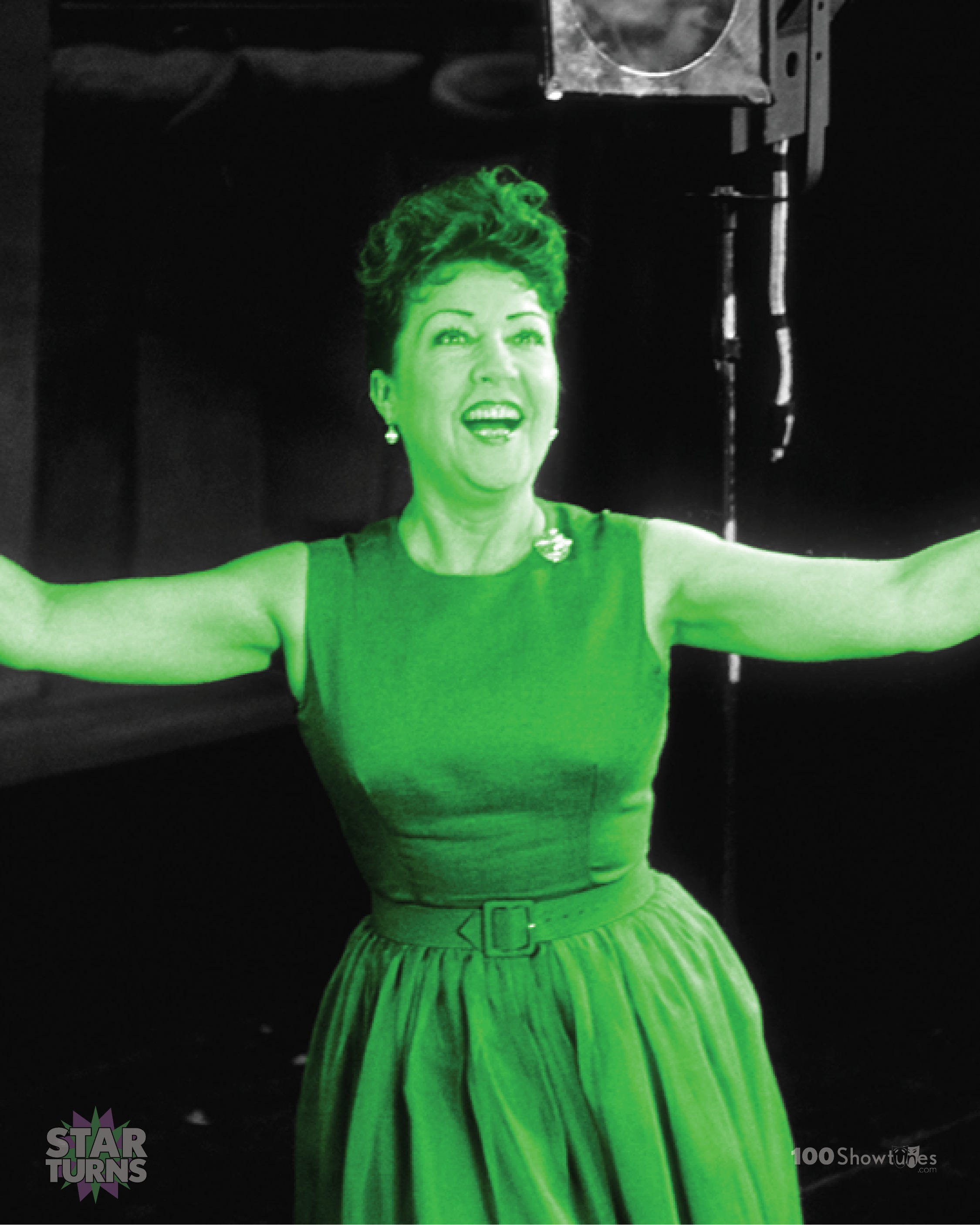
Gypsy started as a collaboration between three of the minds behind West Side Story—Jerome Robbins, Arthur Laurents, and Stephen Sondheim (as both composer and lyricist). The role of Rose was always intended for Ethel Merman, whose brash steamroller of a personality would serve the deluded character well. Merman, however, didn’t want an untested composer, so they called in Jule Styne. It proved an ideal team, with Laurents and Sondheim adding more dimensionality and subtext than musicals were used to seeing, Styne bringing the correct sensibilities for Broadway glitz and vaudeville pastiche, and Robbins expertly bringing these worlds together.
“Roses Turn” is a mental breakdown set to music. It was originally conceived as the sort of “dream ballet” introduced in Oklahoma! that would give Rose the chance to look back at her life following her daughter’s rejection. But Robbins declared one day he didn’t have time to choreograph the ballet, so Sondheim and Styne would have to meet with him after rehearsal to write a song instead. Styne was otherwise occupied that evening, so Sondheim and Robbins built the number in a grimy unused theater, pulling snippets of other songs from the show (including one that would eventually get cut) and crafting them into the ultimate diva showcase, which Merman sold for every performance of Gypsy’s original Broadway run and national tour. It’s funny, angry, delusional, bitter, and ultimately triumphant, culminating with Rose’s name in lights (at least in her own mind).
Recommended Recording: ”Rose’s Turn” Gypsy (1959 Original Broadway Cast)
If you are interested in the American Broadway musical, you need to listen to Ethel Merman sing “Rose’s Turn” at least once in your life. She effortlessly knocks it out of the ballpark, and the orchestra really cooks.
Alternate Performances
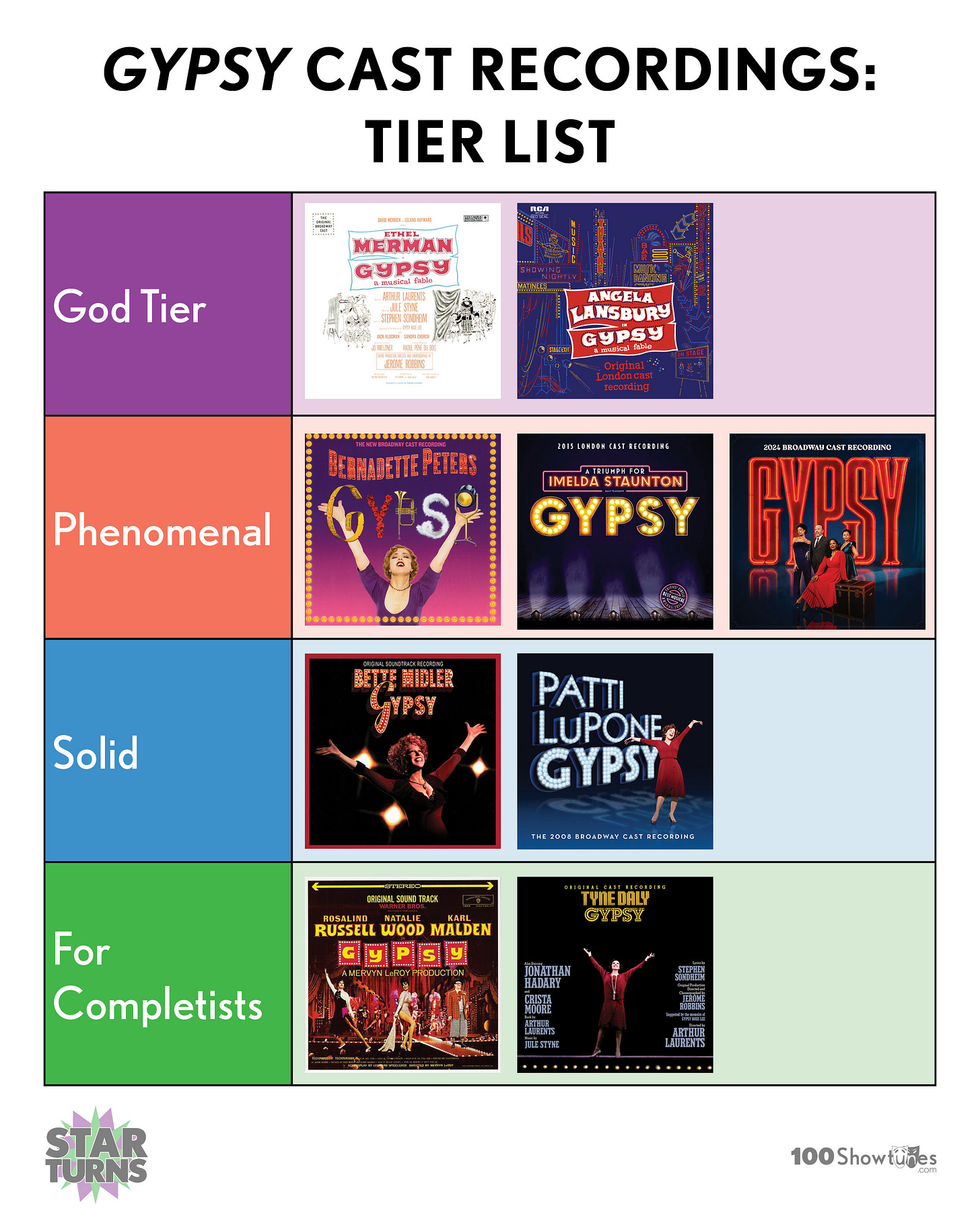
Gypsy has received ~16 cast recordings (including South African, Dutch, German, and Mexican casts), plus a few jazz/“songs from” albums. Barbra Streisand spent years trying to direct and star in a movie version until Sondheim made clear he would not release the rights, thinking it just works best as a stage piece. Also, any TV show that has gay characters will inevitably feature at least one Gypsy joke. While as a general rule, I try to limit this section to three additional recommendations, that is simply not possible here, where every recording is essential. So buckle up, stay hydrated, and take lots of breaks. You got this.
Rosalind Russell/Lisa Kirk(1962) - Rosalind Russel wanted to play Rose, so she secured the film rights and a production team and made a movie. Russell acted the heck out of the part, but she didn’t have the singing chops for Rose, so Lisa Kirk dubbed a lot of the vocals. Kirk expertly mimicked Russell, making for seamless transitions between the two voices, while still falling short of pleasant to listen to. It was a reasonably successful film critically and financially and stayed remarkably faithful to the stage show, incorporating the full overture, recreating Jerome Robbins’ choreography, cutting only one song, and keeping the vast majority of Laurents’s libretto. The original creaters still acted like the movie ran over their dog and railed against it for decades. (Arthur Laurents spent the rest of his life either directing Gypsy or having beef with anyone else’s production.)
Angela Lansbury (1973) - Arthur Laurents directed Angela Lansbury for the London premier, which then came to the states for a tour and limited Broadway run. This production proved that not only could the show work without Merman, but the role could be a rich feast for an exceptionally talented actor. Lansbury’s bright belt fits the score like it was written for her, and her intensity borders on frightening. It also has one of the all time best theater posters. I love this video of a much older Lansbury watching clips of this performance.
Tyne Daly (1989) - Laurents brought on an unconventional Rose for his 1989 Broadway Gypsy, TV star Tyne Daly. Those who saw it swear up and down that Daly is the best Rose there’s ever been, if not the greatest performance of any role that ever was. Unfortunately, Daly was sick the weekend they recorded the cast album, and the producers refused to reschedule, so it’s a rough listen. But even then, her “Rose’s Turn” is a fresh and compelling interpretation. Check out this lovely diary she kept during the pre-Broadway tour which highlights how much she respected the material and the process.
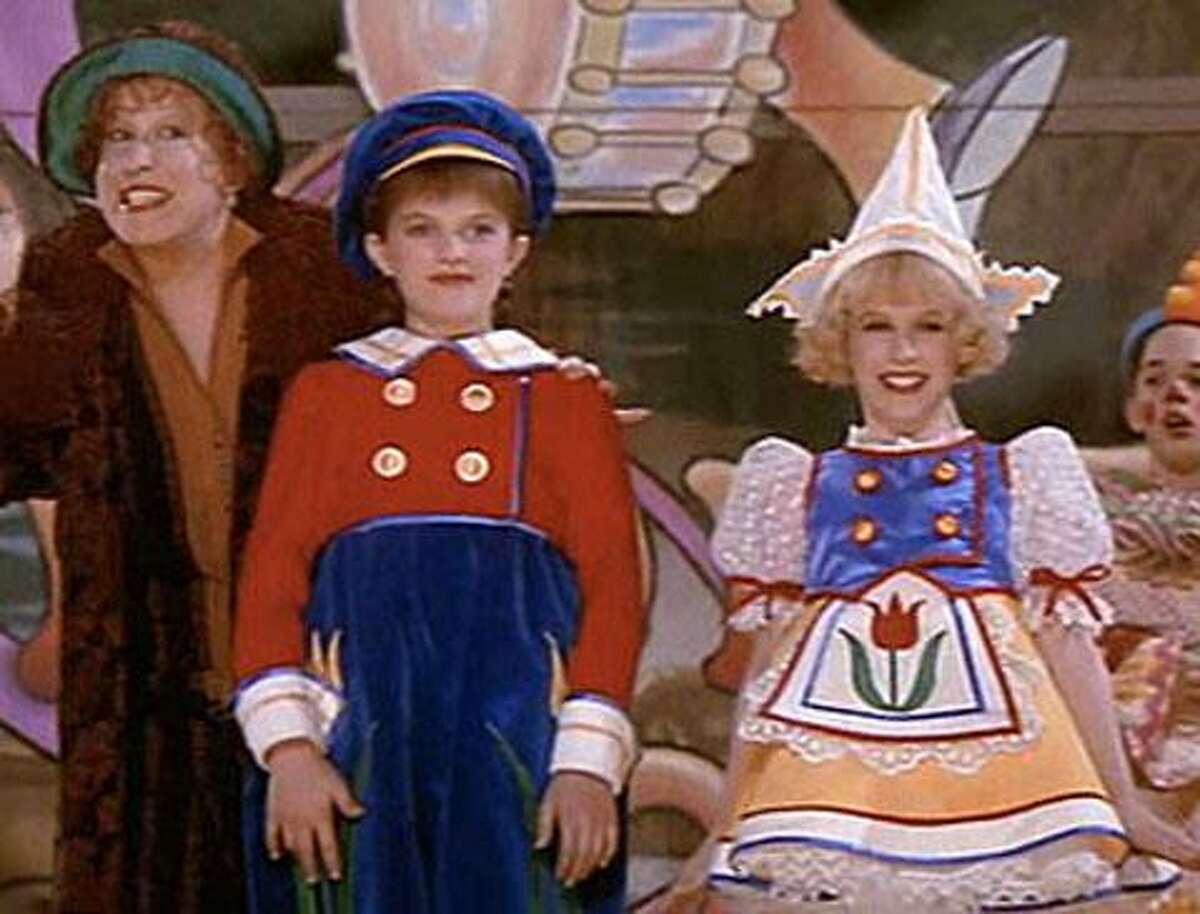
Bette Midler (1993) - This 1993 TV movie is the best way to watch the show at home. Bette Midler sings Rose incredibly well, and the entire production hits the right tone and dramatic beats, well calibrated for smaller screens. It also features pint-sized Lacy Chabert and Elizabeth Moss as young Baby June and Louise.
Bernadette Peters (2003) - Sam Mendes directed a 2003 revival of Gypsy with Bernadette Peters as Rose. (Peters actually appeared in the 2nd National Tour of Gypsy when she was 13 years old.) This was Mendes’s big follow-up to Cabaret, and expectations were high for a dramatic reinvention. It ended up being a divisive if fairly straightforward revival, but Peters is an all-time great Rose—playful and charming, but no less determined.
Patti LuPone (2008) - While Arthur Laurents praised Bernadette Peters’s Rose, he otherwise disliked the Mendes production so much that he directed this 2008 revival purely out of spite.1 Despite Laura Benanti’s and Boyd Gaines’s revelatory Louise and Herbie, this production’s legacy is that time Patti stopped in the middle of “Rose’s Turn” to yell at someone for having a camera out. (He was a photographer hired by the production and doing his job.)
Imelda Staunton (2015) - Imelda Staunton gave a titanic performance as Rose in London’s first major revival since the 1973 production. It addition to a cast recording, this production received a proshot.
Audra McDonald (2025) - George C. Wolfe directed this most recent revival for Audra McDonald. Without changing a word of text, the production explored how the story changes when Rose is a Black woman in 1920s and 1930s America. Musically, it’s not an intuitive fit for McDonald, who hitherto was more likely to sing “Summertime” than “Some People.” Though it sounds different than the Roses you may be used to, McDonald’s Rose is predictably a master class in deeply felt acting through song. As with the Mendes revival, this production was somewhat divisive, but her Tony performance will go down in the annals of history.
Is it Covered by The Rat Pack, Audra McDonald, or Glee?
The Rat Pack - Both Frank Sinatra and Sammy Davis have covered songs from Gypsy.
Audra McDonald played Rose in 2025, as previously mentioned. In the years leading up to that, she started singing “Rose’s Turn” in concerts. She sang it in the London Palladium concert that aired on PBS, though “Rose’s Turn” was conspicuously absent from that broadcast. A “Director’s Cut” of that concert, featuring “Rose’s Turn” will start streaming on National Theater at Home beginning April 30th.
Glee - Kurt sings “Rose’s Turn” in the first season of Glee. Because the internet is a strange place, the recording climbed the Tik Tok Billboard chart (which apparently exists) in 2024 when the “Why did I do it? What did it get me?” section became a meme.
In the Wings
It’s almost preposterous to think you’d want to learn even MORE while you wait for song No. 43 to drop. But you may want to look up one of my favorite bits of theatrical lore. Search “jerome robbins everything’s coming up rose’s what?”
Catch up with all the songs to date!
Voiceover RSS feed for podcast apps: https://api.substack.com/feed/podcast/4189121.rss
For his part, Sondheim wrote the following in Finishing the Hat, his 2010 volume of annotated lyrics: “I’ve seen mistaken productions of the show (including those directed by the show’s author) that make it seem contrived or cartoonish, but never does it seem tired.”
I was in eighth grade when I saw Merman's Gypsy. (That's right; I'm 79). I've seen most of the revival versions, and they were all anywhere from "very good" to "terrific." One that has not been mentioned is a version with Linda Lavin. That was terrific.
In any event, one of the songs from Gypsy that was not mentioned as being pop covered. And that's "Small World." Johnny Mathis recorded it, and, for this eighth-grade boy, if close dancing with a girl then, there was nothing more provocative than Sondheim's lyric, "Lucky, 'cause I'd love to have children." Back in those days that line was a "phenomenon."