


It’s 1998, and you’re watching Ragtime a lavish and epic musical that takes the scale and scope of the 1980s British mega-musical and filter it through distinctly American voices and material. The expansive narrative focuses on three distinct groups in New York at the turn of the 20th Century—upperclass suburban whites, Eastern European immigrants, and African Americans—along with notable celebrities of the day like Harry Houdini, Emma Goldman, and vaudeville star/murderess Evelyn Nesbit. It seems like a lot, but there’s an excellent opening number that explains everything quite clearly. Mother tends the home in New Rochelle. While Father is away on an expedition, mother discovers a black baby buried in her garden, which she learns belongs to a young woman named Sarah. Mother takes in Sarah and her baby, even as she knows her husband would find it unthinkable were he around. When the baby’s father, ragtime pianist Coalhouse Walker, hears about Sarah’s condition, he woos her in his new Model T1 (befriending Mother in the process). Reconciled, the couple and baby take the car on a country picnic and imagine the world of opportunity available to them (“Wheels of a Dream”). As the narrative proceeds, a fire chief initiates a confrontation with Coalhouse and destroys his car. Sarah attends a political rally hoping to appeal to the Vice Presidential candidate, but when someone mistakenly claims she has a gun, the security detail beats her to death. Coalhouse leads a series of violent protests and demonstrations, ultimately dying at the hands of police. In the face of all this tragedy, the musical ends with a reprise of “Wheels of a Dream,” a radical act of hope that the true American dream of liberty and justice for all will prevail…eventually.
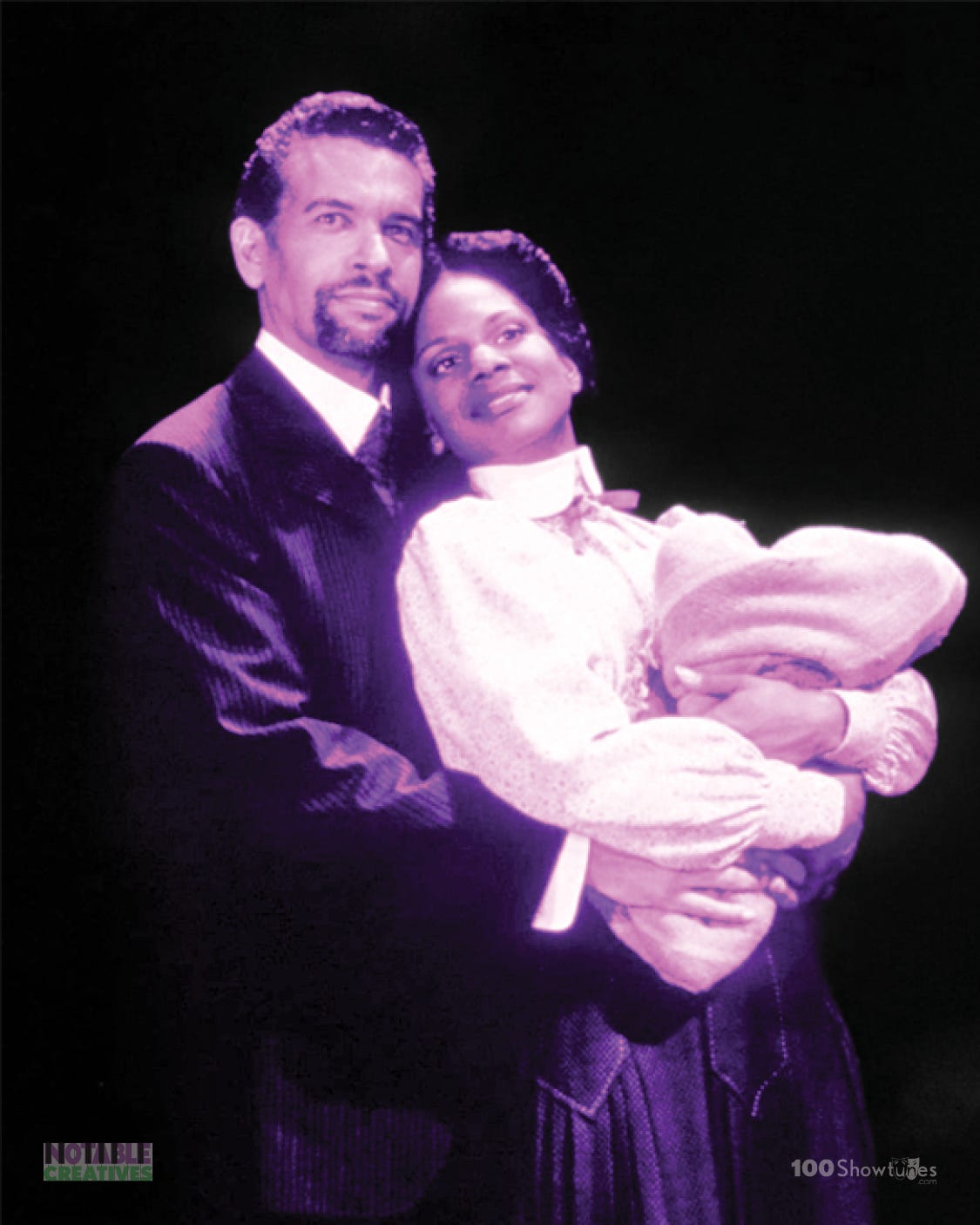
Ragtime is one of those musicals that is deeply beloved by fans of the art form2, even if it has never really penetrated the popular consciousness. The original Broadway production is one of the great triumphs of the decade with a peerless cast elevating an already glorious score. The extravagant production, which required merging two shuttered theaters into one new expansive house, was also its undoing. Critics were blinded by its largess, prompting baseless accusations that is was style over substance3. It ran for two years, but ultimately failed to attract crowds sufficient to sustain a production of that magnitude4. The show continues to loom large in the heart of theater aficionados, thanks to the exemplary work of Terrence McNally, Stephen Flaherty, and Lynn Ahrens. McNally’s book is a masterclass in adaptation, neatly fitting a sprawling novel with three distinct story arcs into a cohesive and impactful narrative. And Flaherty and Ahrens’ score is one of Broadway’s finest, capturing all of the flavors of 1900s America with a contemporary flair. It rarely gets better than this.
Recommended Recording: ”Wheels of a Dream,” Ragtime (1998 Original Broadway Cast)
Ragtime’s original cast recording is one of the most essential theater albums of the 90s. Ken Mandelbaum’s 1998 review for playbill.com puts it best: “I won’t even begin to single out for praise individual numbers, as there are too many superb ones; suffice it to say that this is a major score, one of the finest of recent years.…It’s likewise unnecessary to discuss the leads separately, as they are all glorious, and offer deeply felt performances.” The leads on this particular track are the peerless Audra McDonald and Brian Stokes Mitchell.
I truly think we would be a better country if everyone saw Ragtime every couple of years. I’ve seen four different productions in my life, and it feels urgent and relevant in a different way each time. Listening to the new recording this past week, the Coalhouse/Sarah story felt unbearably pertinent. But I have to believe we are better than what is happening right now.
Alternate Performances
The Original Broadway Cast recording of Ragtime is the only complete commercial recording for the score. The original London production—an entirely new staging with a notable cast—criminally didn’t get recorded at all.
The Original Cast Again (and Again) - In 1996, a single-disk “Songs from Ragtime” album came out following the Toronto try-out. It features a different Emma Goldman than its Broadway counterpart, and a couple of the numbers would get notable revisions before NYC. It’s an interesting peek at a musical in development. In 2023, much of the Original Broadway Cast reunited for concert to benefit the Actor’s Fund. It was originally scheduled for 2020, but was delayed due to Covid-19. Marin Mazzie, the original Mother, passed away in 2018, so Kelli O’Hara played the role for the concert. The evening was filmed and has been announced for both cinematic and television releases, only for both to be cancelled shortly after news broke.
2010 Broadway Cast - A Kennedy Center (RIP) revival, smartly staged by Marcia Milgrom Dodge, transferred to Broadway in 2010. Its minimal production may have been more cost effective, but it failed to attract significant audiences. It’s preserved with a one-disk “Songs from Ragtime” recording.
2025 Broadway Revival Cast - New York City Center presented a concert version of Ragtime for their 2024 gala. Lincoln Center then transferred that production to Broadway, where it has, for the first time, been playing like a hit, extending past its limited run at least until July 2026. Its cast recording came out last week. While the recording features a number of baffling cuts—enough that I wouldn’t even consider it a complete recording, though it has more than either of the “Songs from…” disks—it captures the fine performances, particularly Joshua Henry’s Coalhouse. Nichelle Lewis—the underappreciated star of the recent The Wiz revival—meets the unenviable challenge of tackling one of Audra McDonald’s signature roles and making it her own. The production makes a very…strong choice with the final note of the final “Wheels of a Dream” reprise. Not having seen the whole production, I can’t really comment on the correctness of that choice, but at least they committed to it.
Is it Covered by The Rat Pack, Audra McDonald, or Glee?
Audra McDonald - Ragtime marked the first time Audra created a role in a musical on Broadway, and it firmly established her as one of the top performers of her generation. Her little hum after Coalhouse sings “they’ll take to him like cats to cream” has lived rent free in my mind for 28 years. “Your Daddy’s Son,” Sarah’s lullaby in which she explains why she buried her baby, is Audra at the height of her powers. I also love this performance of the opening number on The Rosie O’Donnell Show in which Audra out-sings the entire company on the last note.
Glee - At age 11, Lea Michele created the role of The Little Girl (the daughter of Tateh, the center of the immigrant storyline) in the original Broadway production of Ragtime. She has a blink-and-you’ll-miss-it appearance at the top ofthis performance of “Our Children” on Rosie.
In the Wings
As you wait for song No. 36, there’s lot of Ragtime stuff to look into. Playbill ran this oral history of Ragtime’s genesisaround the time of the reunion concert. Among many highlights, in includes Audra McDonald describing hearing “Wheels of a Dream” for the first time. Joshua Henry and Nichelle Lewis have been singing “Wheels of a Dream” for anyone who’ll have them. There’s also this performance of the song from a “Ragtime Fan Film” that I really enjoy.
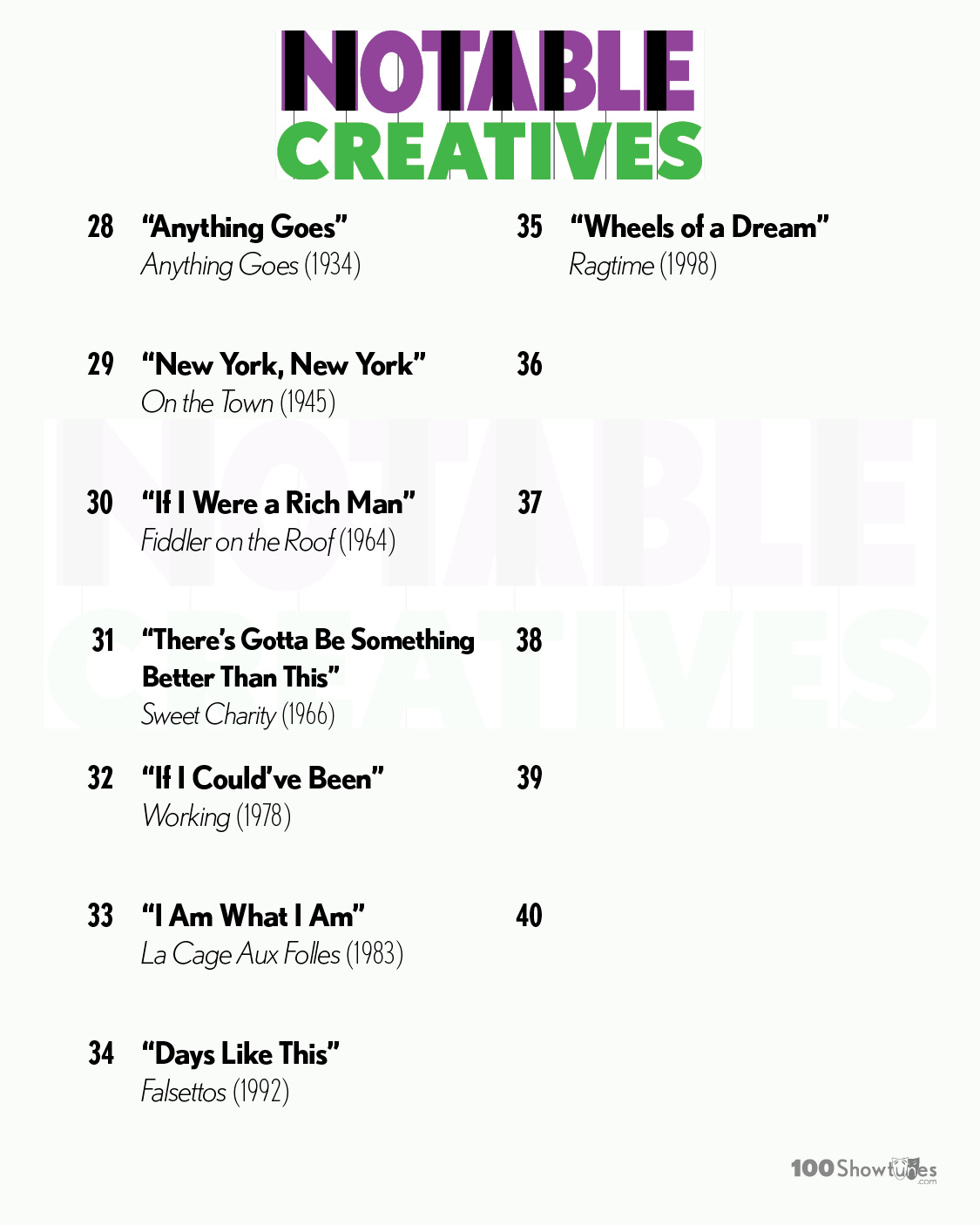
Catch up with all the songs to date!
Voiceover RSS feed for podcast apps: https://api.substack.com/feed/podcast/4189121.rss
In perhaps the deepest example of corporate synergy in Broadway history, Ragtime restored and re-opened a Broadway theater for the production, naming it the Ford Center for the Arts.
If you were a musical theater fan in the late ‘90s, there’s an excellent chance it’s one of your top 10 favorite shows.
They may have also been irked by an aggressive and prolonged publicity campaign that began a year prior to the show even opening.
The fact that the lead producer was a criminal certainly didn’t help either.